

For a long time, fitness was associated with gym memberships, expensive equipment, and complicated workout routines. That mindset has changed dramatically. More people than ever are now exercising at home not necessarily because they want intense training programmes, but because they want movement that actually fits into everyday life.
The biggest surprise for many beginners is realising you do not need a room full of equipment to stay active. In fact, some of the most effective home workouts rely on simple bodyweight exercises, short routines, and consistency rather than expensive machines or complicated setups.
That is especially important for people balancing work, family life, limited space, or busy schedules. When exercise feels easy to start, it becomes much more realistic to maintain long term. This is where home-friendly fitness tools like vibration plates can also help. They are not designed to replace movement entirely, but they can make simple home workouts feel more engaging, dynamic, and easier to stick with consistently.
In this guide, we explore how to exercise at home without equipment, which exercises work best for beginners, and how vibration plates can naturally support home fitness routines.

Why Home Workouts Have Become So Popular
One of the biggest reasons people stop exercising is convenience. Travelling to a gym, finding time for long sessions, or feeling overwhelmed by complicated workout plans can quickly turn fitness into something stressful rather than sustainable.
Home workouts remove many of those barriers. Instead of needing:
Expensive memberships
Large amounts of free time
Specialist machines
Travel time
Advanced fitness knowledge
…people can focus on movement that fits naturally into daily routines.
This shift has made home fitness more accessible for beginners, busy professionals, parents, and people looking for lower-pressure ways to stay active. The goal is no longer perfection. It is consistency.
Do You Really Need Equipment to Stay Fit?
No and that is one of the biggest misconceptions surrounding fitness.
Bodyweight movement alone can support:
Mobility
Balance
Strength
Coordination
Daily activity levels
General fitness
Simple exercises performed consistently are often more effective long term than overly ambitious routines that quickly become difficult to maintain. That is why many beginner-friendly home workouts focus on movements that require no equipment at all.
Exercises like squats, planks, glute bridges, lunges, and stretching routines can all be done in a small space with minimal setup. For many people, the hardest part is simply starting. Once movement becomes part of a routine, consistency becomes much easier to maintain.

The Best No-Equipment Exercises for Home
The best home exercises are usually the simplest ones. They are easy to learn, adaptable for different fitness levels, and practical enough to fit into everyday routines.
Squats
Squats are one of the most effective lower-body exercises you can do at home.
They help engage:
Legs
Glutes
Core muscles
Balance and stability
They also require no equipment and very little space.
Glute Bridges
Glute bridges are particularly useful for people who spend long hours sitting. They help activate the glutes and posterior chain while remaining low impact and beginner-friendly.
Planks
Planks are a simple way to strengthen the core without high-impact movement. Short holds performed consistently can help improve overall stability.
Lunges
Lunges help improve lower-body strength and coordination while also encouraging balance and mobility. Beginners can start slowly using shallow ranges of motion.
Stretching and Mobility Work
Mobility routines are often overlooked in home fitness discussions. Simple stretching sessions can help reduce stiffness, improve movement quality, and support recovery after long workdays or sedentary periods.
| Exercise | Duration |
| Basic Standing Hold | 2 Minutes |
| Squats | 2 Minutes |
| Lunges | 2 Minutes on each leg |
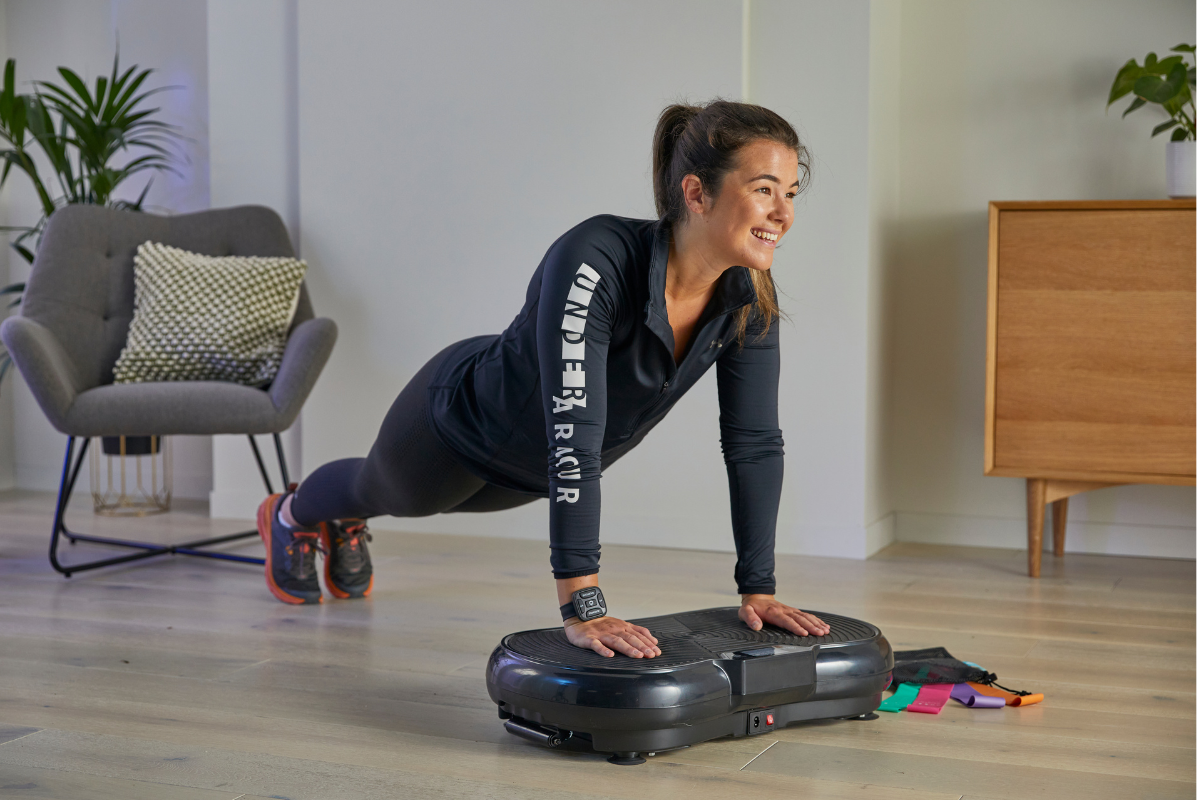
| Push-Ups (hands on plate) | 2 Minutes |
| Tricep Dips | 2 Minutes |
| Glute Bridges | 2 Minutes on each leg |
| Gentle Stretching | 3 Minutes |
This type of routine can be adjusted based on fitness level, mobility, or available time.
The important thing is building consistency rather than chasing intensity immediately.

Common Mistakes With Home Fitness
One reason people struggle with home workouts is unrealistic expectations.
There is often pressure to:
Exercise every day immediately
Follow advanced online workouts
Train intensely from the start
Buy unnecessary equipment
Compare progress with others
In reality, sustainable fitness routines are usually much simpler. Short, achievable workouts are often far more effective than inconsistent extreme routines.
Another common issue is boredom. Repeating the same bodyweight exercises every day can eventually feel repetitive, especially for people who struggle with motivation. That is one reason many home users begin looking for ways to make workouts feel more engaging without turning them into complicated gym-style sessions.
How Vibration Plates Enhance Home Workouts
Vibration plates can fit naturally into home fitness routines because they work well alongside simple bodyweight exercises. Rather than replacing movement, they help enhance movements that people are already doing.
Exercises such as:
Squats
Calf raises
Standing balance work
Planks
Stretching routines
…can all be performed on a vibration plate.
For many users, this helps make short workouts feel more dynamic and engaging. Vibration plates are also popular because they suit:
Small spaces
Busy schedules
Low-impact routines
Beginner-friendly workouts
Recovery-focused sessions
At Bluefin Fitness, vibration plates are designed specifically for practical home use, helping people integrate movement more easily into everyday life. For people who struggle with workout motivation, convenience often makes a major difference.
A home-friendly setup removes many of the barriers that stop exercise from happening consistently in the first place.
Final Thoughts
Exercising at home does not need to be complicated, expensive, or intimidating. Some of the most effective fitness habits come from simple routines that feel realistic enough to maintain consistently.
Bodyweight exercises, mobility work, stretching, and short daily sessions can all support movement and overall fitness without requiring a gym membership or large amounts of equipment. For people looking to make home workouts feel more engaging, vibration plates can also provide a practical low-impact addition to those routines.
The key is not creating the “perfect” workout plan. It is creating one that fits naturally into your life. Because the routines people stick with are usually the routines that deliver the best long-term results.

FAQs
Can you get fit without equipment?
Yes. Bodyweight exercises, walking, mobility work, and short home workouts can all support fitness and movement without equipment.
What are the best exercises to do at home?
Squats, lunges, planks, glute bridges, and stretching routines are all effective beginner-friendly home exercises.
Are vibration plates good for home workouts?
Yes. Vibration plates can help make home workouts feel more engaging while supporting low-impact movement and recovery-focused exercise.
How long should a home workout be?
Even 10 to 20 minutes can be effective when performed consistently.
Do you need lots of space for home fitness?
No. Many home workouts require only a small open area and minimal setup.
Share:
Low-Impact Workouts for Busy People: Quick & Effective Solutions
Do Vibration Plates Actually Work? Debunking Myths and Setting Real Expectations