

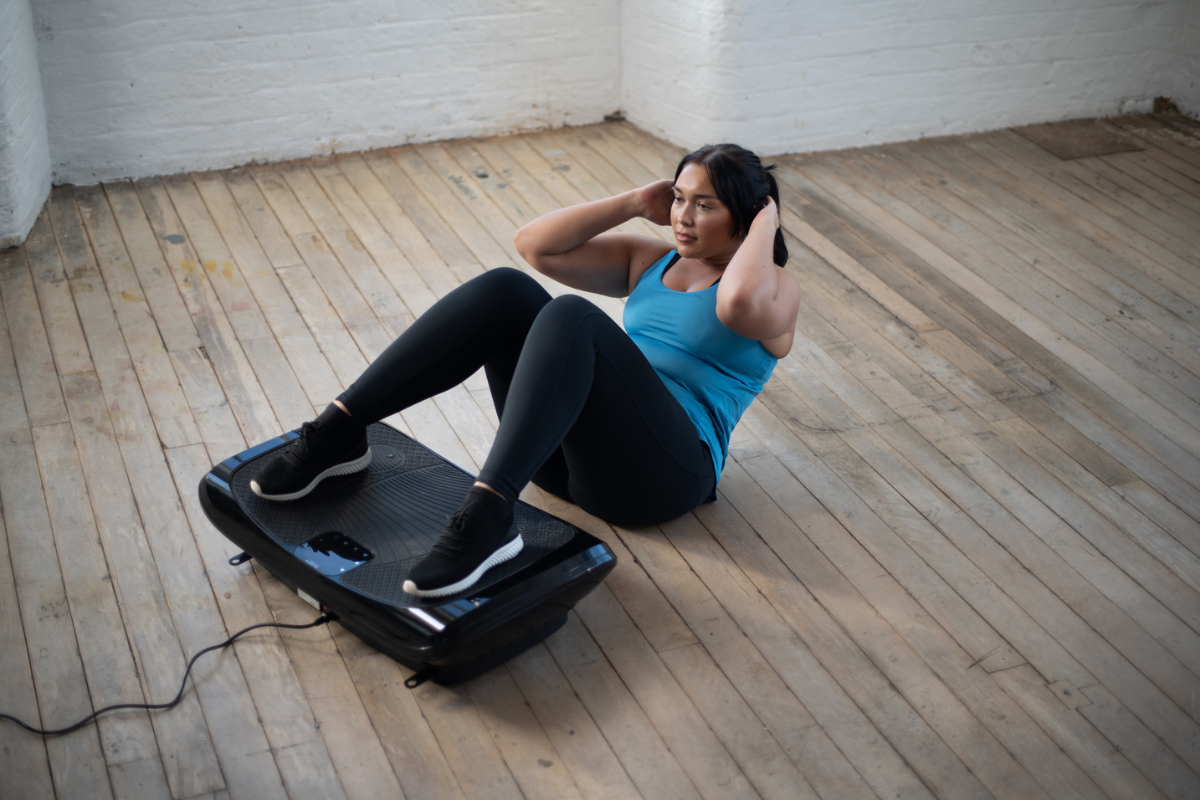
Poor circulation, from cold extremities to heavy legs, is a common frustration, and a vibration plate for circulation offers a time-efficient, home-friendly solution. This guide breaks down seven proven strategies covering stance, frequency settings, and routine structure to help you get the most circulatory benefit from every session.
Poor circulation is something many of us deal with daily. Cold hands and feet, that heavy-leg feeling after long hours at a desk, sluggish recovery after a workout, these are familiar frustrations for a lot of people. While lifestyle habits like walking and stretching make a genuine difference, vibration plate training has emerged as a compelling, time-efficient way to support healthy blood flow from the comfort of your own home.
Vibration plates work by sending rapid, rhythmic oscillations through your body, causing your muscles to contract and relax many times per second. This involuntary muscle activity is believed to stimulate blood vessel function, encourage lymphatic drainage, and promote the kind of circulatory response you'd normally associate with moderate aerobic exercise, in a fraction of the time.
But simply stepping onto a plate and hoping for the best won't deliver the most from your sessions. The way you stand, the positions you hold, the frequency settings you choose, and how you structure your routine all make a meaningful difference to how effectively your circulation responds.
In this guide, we've mapped out seven practical, evidence-informed strategies to help you use a vibration plate specifically for circulation benefits. Whether you're brand new to vibration training or looking to get more targeted results from your existing plate, these approaches will help you train smarter. Let's get moving.

1. Start With Low Frequency to Prime Your Vascular System
The Challenge It Solves
Jumping straight into high-intensity vibration without warming up your vascular system is a bit like sprinting before you've stretched. Your blood vessels need time to dilate and your circulation needs to ramp up gradually. For beginners or anyone with existing circulation concerns, skipping this step can mean missing out on a significant portion of the session's benefit.
The Strategy Explained
Starting your session at a lower frequency setting, typically in the 20–30 Hz range, acts as a vascular warm-up. At these settings, the oscillations are rhythmic and manageable, encouraging gradual increases in blood flow without overloading the system. Think of it like the difference between easing into a warm bath versus jumping into cold water. The body responds better when given time to adapt.
Lower frequencies are also associated with more comfortable, steady oscillation that's particularly effective for stimulating the muscle pump mechanism in the legs, the process by which contracting muscles push blood back toward the heart. Starting here sets the foundation for everything that follows in your session.
Implementation Steps
1. Begin every session at a frequency between 20–25 Hz, regardless of your experience level.
2. Stand in a comfortable, slightly bent-knee position and hold this for 2–3 minutes before adjusting any settings.
3. Gradually increase the frequency in small increments, giving your body a minute or two to adjust at each level before progressing further.
Pro Tips
If you're using a Bluefin Fitness plate with a digital display, use the frequency readout to stay precise rather than guessing. Consistency matters here. The warm-up phase doesn't need to be long, even 2–3 minutes at a lower frequency can meaningfully prime your vascular system before you move into the main part of your session.
2. Use Targeted Standing Positions for Lower Limb Circulation
The Challenge It Solves
The lower limbs are where circulation most commonly struggles. Gravity works against venous return in the legs, and long periods of sitting or standing still can cause blood to pool in the calves and feet. This is why so many people experience heaviness, swelling, or that uncomfortable tingling sensation after a long day. A vibration plate can directly address this, but only if you're positioned correctly.
The Strategy Explained
Foot placement and knee angle on the plate determine where the oscillation is most effectively directed through your body. A wider stance with a gentle knee bend engages the calf muscles more fully, activating the muscle pump in exactly the area where circulation tends to lag. Narrower stances tend to transfer vibration more through the joints rather than the soft tissue, which reduces the circulatory benefit.
You can also experiment with a split stance, where one foot is positioned slightly ahead of the other. This variation shifts the emphasis between muscle groups and ensures more even stimulation across both legs. Rotating between positions within a session keeps the stimulus fresh and reaches different areas of the lower limb.
Implementation Steps
1. Start with feet shoulder-width apart, toes pointing slightly outward, and knees softly bent at around 20–30 degrees.
2. After 2–3 minutes, try a slightly wider stance to increase calf engagement and deepen the muscle pump effect.
3. Rotate to a split stance for 1–2 minutes on each side to target different areas of the lower leg and improve bilateral circulation.
Pro Tips
Avoid locking your knees at any point. Straight legs transfer vibration directly to the joints rather than through the muscles, which reduces circulatory benefit and increases joint stress. Keep a soft, athletic bend throughout. If you're new to this, practise the positions standing still first before stepping onto the plate.
3. Combine Dynamic Movements to Amplify Blood Flow Response
The Challenge It Solves
Static standing on a vibration plate provides a useful baseline benefit for circulation, but it has a ceiling. If you stay in one position for an entire session, your body adapts quickly and the stimulus becomes less effective. The circulatory response plateaus, and you're leaving a significant portion of the potential benefit on the table.
The Strategy Explained
Adding simple dynamic movements to your vibration sessions dramatically increases the circulatory response. When you perform calf raises, mini squats, or gentle marching on the plate, you're engaging more muscle groups simultaneously. More active muscles mean greater blood demand, which drives a stronger and more widespread increase in blood flow throughout the body.
The key is keeping the movements controlled and deliberate. You're not trying to work up a sweat or push your limits, you're using movement as a tool to amplify what the plate is already doing. Even small ranges of motion, performed rhythmically in time with the plate's oscillation, can meaningfully elevate the circulatory response compared to standing still.
Implementation Steps
1. After your warm-up phase, introduce slow calf raises, rise onto your toes, hold briefly, then lower. Aim for a steady, controlled rhythm rather than speed.
2. Progress to mini squats: bend the knees to around 45 degrees, hold for a breath, then return to standing. Repeat for 60–90 seconds at a time.
3. Try gentle marching on the spot, lifting alternate feet just a few centimetres off the plate, to introduce a walking-like muscle pump pattern.
Pro Tips
Use the plate's handle bar or a nearby wall for balance when introducing dynamic movements for the first time. The goal is smooth, controlled motion rather than effort. If a movement feels unstable, simplify it. Consistency of movement quality matters far more than complexity, especially when your primary focus is circulation rather than strength or fitness.
4. Leverage the Lymphatic Drainage Window After Each Session
The Challenge It Solves
Most people step off their vibration plate and immediately sit back down, missing a valuable window of opportunity. Unlike the cardiovascular system, the lymphatic system has no dedicated pump, it relies entirely on physical movement to circulate lymph fluid through the body. Immediately after a vibration session, the lymphatic system is primed and responsive, but it needs continued movement to carry that benefit through.
The Strategy Explained
In the 10 minutes immediately following a vibration session, light movement and specific cool-down positions can meaningfully extend the lymphatic drainage benefit. This is particularly relevant for anyone dealing with fluid retention, puffiness in the lower limbs, or a general sense of heaviness that doesn't shift easily.
Gentle walking, slow leg swings, or simply staying on your feet and moving around after your session keeps the lymphatic momentum going. Combining this with a brief period of leg elevation, lying down and resting your legs against a wall or on a pillow, uses gravity to support both lymphatic and venous drainage simultaneously.
Implementation Steps
1. When your vibration session ends, resist the urge to sit down immediately. Walk slowly around the room for 3–5 minutes to maintain lymphatic movement.
2. Perform a few gentle ankle circles and leg swings to keep the lower limb lymphatics active without adding intensity.
3. Finish with 5 minutes of leg elevation: lie on your back and rest your legs against a wall or prop them on a cushion above hip height.
Pro Tips
This cool-down window is especially valuable if you train in the evening. The combination of lymphatic drainage and leg elevation is deeply relaxing and can support better sleep quality alongside the circulatory benefits. Think of it as a free bonus attached to every session, it costs no extra time or effort, just a small shift in what you do immediately after stepping off the plate.
5. Build a Consistent Short-Session Habit Rather Than Occasional Long Sessions
The Challenge It Solves
It's tempting to think that a long, intense session once a week is equivalent to shorter, more frequent ones. When it comes to circulation specifically, this isn't the case. Vascular health responds best to regular, repeated stimulus. Infrequent sessions, even long ones, don't give the cardiovascular system enough consistent input to drive lasting adaptation.
The Strategy Explained
A 10-minute daily session delivers more sustained vascular benefit than a single weekly session of much longer duration. This is consistent with broader principles in exercise science, where regular moderate-frequency activity is generally considered more effective for vascular health than sporadic intense effort. The body's circulatory system adapts through repeated exposure, not occasional overload.
The practical challenge is habit formation. The good news is that 10 minutes is genuinely achievable for most people. The key is anchoring your vibration session to an existing daily habit — morning coffee, your lunch break, or the 10 minutes before your evening shower. When the new behaviour is attached to something you already do automatically, it becomes far easier to sustain.
Implementation Steps
1. Identify one existing daily habit that naturally creates a 10-minute window, this becomes your vibration plate anchor point.
2. Place your plate somewhere visible and accessible, not tucked away in a cupboard. Out of sight genuinely does mean out of mind when it comes to habit consistency.
3. Commit to frequency over intensity for the first four weeks. Even a simple 10-minute standing session every day will outperform sporadic longer efforts for circulation purposes.
Pro Tips
The Bluefin Fitness Ultra SLIM is particularly well-suited to this strategy. Its compact, space-saving design means it can live in your living room or bedroom without dominating the space, keeping it visible and ready to use without any setup friction. The easier it is to step on, the more likely you are to actually do it.

6. Pair Vibration Training With Hydration and Post-Session Elevation
The Challenge It Solves
Vibration training, like any form of exercise, places demands on the body's fluid systems. If you're dehydrated going into a session, your blood becomes more viscous, which makes circulation less efficient. And if you sit or stand still immediately after training, you lose the gravitational advantage that could be helping your venous return. Two simple habits address both of these issues directly.
The Strategy Explained
Adequate hydration supports healthy blood viscosity, which is widely understood to contribute to efficient circulation. Drinking water before and after your session ensures your blood flows as freely as possible, making the most of the circulatory stimulus the plate provides. This isn't complicated, it's simply making sure you're not undermining your session with a factor that's entirely within your control.
Post-session leg elevation works with gravity to support venous return, the process of blood being pushed back toward the heart from the extremities. Lying down with your legs raised above hip level for just 5 minutes after your session can noticeably reduce lower limb heaviness and complement the work your vibration session has already done.
Implementation Steps
1. Drink a glass of water 15–20 minutes before your session begins. If you're training in the morning, make hydration your first act of the day before stepping on the plate.
2. Keep water nearby during your session and sip as needed, particularly if you're incorporating dynamic movements.
3. After your session, spend 5 minutes with legs elevated, against a wall, on a sofa arm, or propped on a pillow. Even a modest elevation makes a meaningful difference to venous drainage.
Pro Tips
These two habits compound over time. The more consistently you combine hydration and elevation with your vibration sessions, the more efficiently your circulatory system functions day to day. They're also the kind of habits that carry benefits well beyond your training sessions, good hydration and occasional leg elevation are worthwhile practices regardless of whether you're using a vibration plate.
7. Progress Your Frequency and Session Complexity Over Time
The Challenge It Solves
The human body is remarkably good at adapting. What challenges your circulatory system in week one will feel routine by week four. If your routine stays identical indefinitely, the stimulus becomes familiar and the vascular response diminishes. This is a common reason why people feel like their vibration plate has "stopped working", the plate is fine, but the routine has become too comfortable.
The Strategy Explained
A structured progression over four weeks keeps the circulatory stimulus fresh and effective. This means gradually increasing your frequency settings as your body adapts, and introducing more complex movement patterns to engage a wider range of muscle groups. The goal isn't to make sessions harder for the sake of it, it's to ensure your vascular system continues to receive a meaningful challenge that drives ongoing adaptation.
The Bluefin Fitness 4D Triple Motor plate is particularly well-suited to this kind of progressive training. Its multi-directional vibration capability means you have genuine variety to draw from as your sessions evolve, rather than simply turning a dial higher and hoping for the best.
Implementation Steps
1. Weeks 1–2: Focus on the foundational strategies, low-frequency warm-ups, correct standing positions, and simple static holds. Keep frequency in the 20–30 Hz range.
2. Weeks 3–4: Begin introducing dynamic movements (calf raises, mini squats, marching) and gradually increase your working frequency toward the 30–40 Hz range for portions of your session.
3. Beyond week 4: Experiment with more varied positions, longer dynamic movement sequences, and higher frequency intervals, always returning to a lower frequency cool-down at the end of each session.
Pro Tips
Keep a simple log, even a note on your phone, tracking the frequency settings and movements you used each session. This makes it easy to spot when you've plateaued and need to introduce a new variable. Progression doesn't have to be dramatic. Small, consistent increases in frequency or movement complexity are enough to maintain an effective circulatory stimulus over the long term.

Putting It All Together
Improving circulation with a vibration plate isn't about one magic session. It's about applying the right strategies consistently and letting them compound over time. Start by dialling in your frequency settings and standing positions, layer in dynamic movements as your confidence grows, and build a short daily habit that fits around your life rather than disrupting it.
The recovery habits, hydration, leg elevation, and that post-session lymphatic window, are the unsung heroes that quietly amplify your results. And as your body adapts, progressing your routine ensures you keep making meaningful gains rather than plateauing at the same level indefinitely.
If you're not yet sure which Bluefin Fitness vibration plate suits your circulation goals, the choice often comes down to space and ambition. The Ultra SLIM is ideal if you want a compact, everyday-use plate that fits seamlessly into a consistent short-session habit. The 4D Triple Motor is the better fit if you're ready to explore more varied, progressive training from the outset. Both are built with UK-designed silent-drive motor technology, delivering consistent, effective vibration session after session.
Ready to take the first step towards better circulation?
Share:
7 Best Strategies to Get the Most from Your Vibration Plate
Vibration Plate for Lymphatic Drainage: How It Works and Why It Matters