

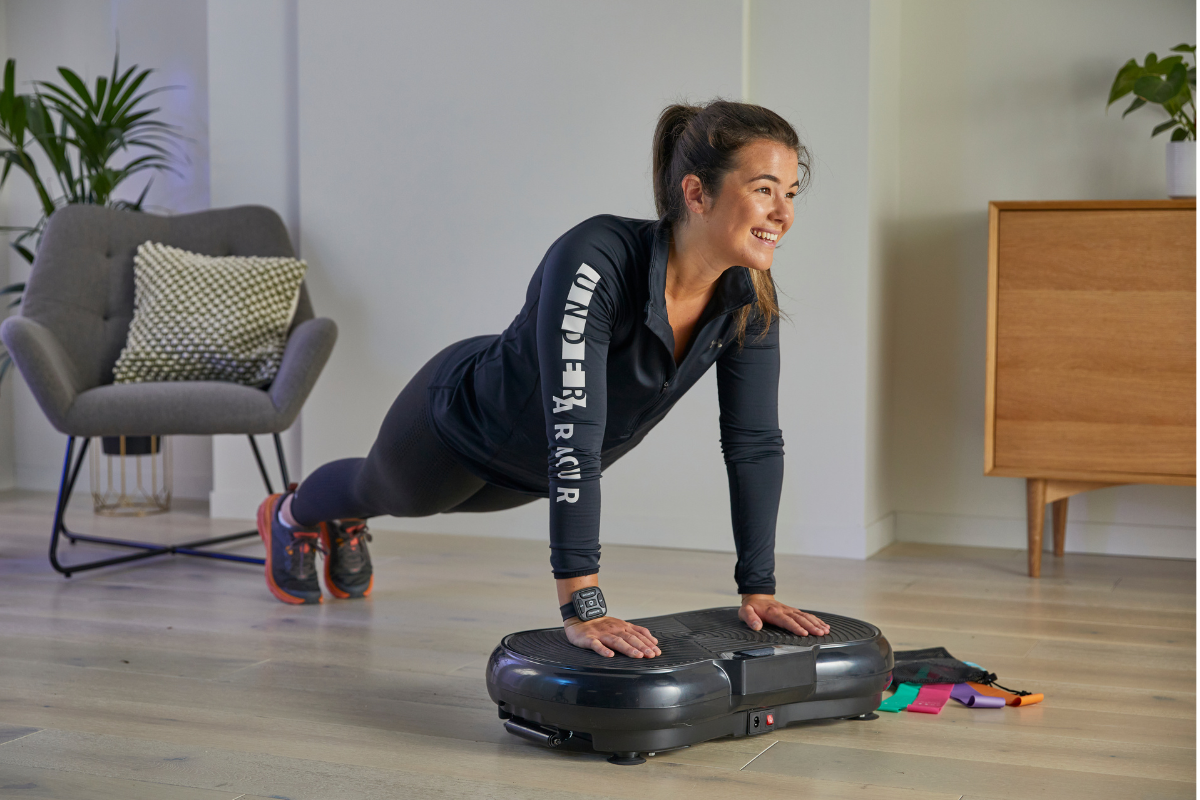
The vibration plate market can seem confusing at first: different wattages, technical terms such as oscillating or vertical vibration, and prices ranging from beginner vibration plates to professional models.
However, if you approach your search with a clear strategy rather than being guided by marketing claims, you can quickly find the best vibration plate for your home, training goals and budget.
The following seven criteria will help you choose the right vibration plate, whether you are a beginner, train in a small flat, are using vibration training as part of rehabilitation exercises or want to work more intensively on your fitness.

1. Define Your User Type First
Before comparing technical specifications, decide exactly what you want to use your vibration plate for.
A gentle introduction after a long break from training requires different features from a vibration plate designed to support rehabilitation exercises, fit into a small flat or enable more intensive strength training.
This distinction is important because it will influence every other buying decision you make.
For example, imagine someone with chronic back problems who is looking for a way to improve mobility. They may benefit more from a vibration plate with gentle vertical vibration and lower frequencies than from the most powerful high-performance machine designed for competitive athletes.
If you are still unsure whether a vibration plate actually delivers its claimed benefits, it is worth understanding the basics of vibration technology before choosing a model.
Here is how to get started:
-
Write down your three most important goals, such as muscle building, improved circulation or saving space in your home.
-
Put these goals in order of priority.
-
Filter vibration plates using this list rather than marketing claims or the highest price.
One of the most common mistakes is buying the most expensive or powerful vibration plate when your actual needs are much simpler.
Before making a decision, check how many of your three main requirements each vibration plate actually meets. This provides a simple but reliable way to judge whether the model is right for you.
2. Understand Vibration Technology
The type of movement produced by a vibration plate has a major influence on the type of training you can perform and how joint-friendly the movement feels.
There are generally two common types of vibration.
Oscillating vibration moves the platform from side to side in a seesaw-like motion, while vertical vibration moves the entire platform evenly up and down.
Oscillating systems can place more emphasis on the hips and lower back muscles, while vertical vibration is often considered a more joint-friendly option.
Bluefin's 4D Triple Motor combines vertical vibration, oscillating vibration and an additional lunge-style movement within one vibration plate.
This allows users to switch between gentler beginner training and more intensive vibration training without changing equipment. It can be particularly useful for more ambitious users whose training intensity changes over time.
A direct comparison between the different Bluefin vibration plate models can also help you make your final choice.
When reading a product description, look specifically for terms such as oscillating, vertical vibration or 4D Triple Motor, and compare the vibration technology with your training goals.
A common misconception is that all vibration plates work in the same way. In reality, the training experience and effects can differ considerably depending on the type of vibration.
A useful way to compare models is to consider the number of vibration movements available in relation to your actual training plan.
If you want versatility, a vibration plate with several types of movement may be more suitable. If your training is more specialised, one well-designed vibration movement may be enough.
3. Check Motor Power and Frequency Range
Motor wattage, maximum vibration frequency in Hertz and motor noise levels can help indicate how powerful and suitable a vibration plate is for regular use.
Frequency describes how many times the vibration plate moves per second, with common ranges sitting at approximately 5 to 40 Hz.
Lower vibration frequencies can be suitable for recovery and gentle exercises, while higher frequencies may be used for more intensive strength training.
A Silent Drive motor, such as those used in Bluefin vibration plates, can also make it easier to train in the evening without disturbing neighbours or other people in your household. This is particularly important when using a vibration plate in a flat or shared home.
When choosing a vibration plate, check the technical specifications carefully, including motor wattage, Hz frequency range and decibel levels where available.
Do not rely solely on marketing terms such as “professional motor”.
A common misconception is that a higher wattage automatically means a better vibration plate. The actual vibration frequency range and motor noise are at least as important, particularly when comparing cheaper and premium vibration plates.
Compare maximum frequency and noise levels with your intended training intensity and living situation. This gives you a more realistic indication of whether the vibration plate is suitable than motor power alone.
4. Consider Size and Noise for Small Flats
If you live in a small flat or have limited space at home, the size, weight and noise of a vibration plate can be more important than its maximum power.
A vibration plate that permanently takes up valuable living space or creates excessive noise during training can quickly become inconvenient.
For example, a compact vibration plate with a foldable support bar can be stored under furniture or in a small space after use rather than permanently taking up floor space.
Models such as the Bluefin Ultra SLIM are designed with this type of use in mind, combining a compact design with space-saving home training.
This can make them particularly suitable for anyone looking for effective home workouts without large amounts of equipment.
Use the following process:
-
Measure the footprint and total height of the vibration plate in centimetres.
-
Compare these measurements with the space actually available in your home.
-
Look for foldable or removable support handles that can make the vibration plate easier to store.
A common mistake is measuring only the footprint of the vibration plate and forgetting about the additional safe training space needed around it for arm movements, side movements and exercises.
Calculate the total floor space required for both the vibration plate and your training movements before choosing a model.
5. Check Maximum Weight and Safety Features
Maximum user weight, a non-slip training surface and stable support handles are particularly important for beginners, rehabilitation users and people who may have balance difficulties.
These features are sometimes treated as secondary considerations, even though they can have a direct impact on training safety.
Consider someone with reduced balance following a knee injury.
They may benefit much more from a vibration plate with a high, stable support handle and a gentle preset training programme than from a minimalist sports vibration plate designed primarily for performance training.
During recovery, it may also be useful to explore specific recovery strategies using a vibration plate.
Choose a vibration plate with a maximum user weight that provides a reasonable safety margin above your own body weight rather than selecting a model where you are close to the maximum limit.
If you have an existing medical condition, you should seek medical advice before using a vibration plate.
It is also important to remember that a vibration plate is not a universal treatment and does not replace professional medical care. It may be used to support rehabilitation exercises when used appropriately and in consultation with a healthcare professional.
A common mistake is using a vibration plate close to its maximum user weight rather than allowing additional capacity for safer training.
You can compare your body weight with the maximum load of the vibration plate to understand how much additional capacity each model provides.

6. Use Training Programmes and App Connectivity
Preset training programmes and digital progress tracking can make it easier for beginners to start structured vibration training and help more experienced users measure their progress.
Without some form of structure, training can easily become inconsistent, as motivation alone can be difficult to maintain over several weeks.
The Bluefin Ultra SLIM, for example, includes specific programmes designed for toning and fat-burning workouts targeting areas such as the stomach and legs.
These programmes can help users follow a more structured vibration plate workout without needing a personal trainer.
More ambitious users may also benefit from Bluetooth or app connectivity to record vibration plate workouts over several weeks or months, including as part of a structured weight loss programme using a vibration plate.
Before choosing a vibration plate, check two things:
How many preset training programmes are included, and whether the vibration plate offers Bluetooth or app connectivity for recording workouts.
One common mistake is focusing too heavily on app features while overlooking the basic quality of the motor and construction.
An app cannot turn a poorly designed vibration plate into a good one.
A better measure of success is how consistently you use your vibration plate over several weeks. This can be tracked through an app or, if necessary, with a simple written training diary.
7. Compare Value for Money and Warranty
The final price of a vibration plate should never be considered in isolation.
Instead, compare the price with motor quality, included features, vibration technology and warranty length.
Two vibration plates with a similar price can be very different in terms of durability, functionality and overall value for money.
A common mistake is focusing only on the lowest purchase price while overlooking short warranty periods or limited customer support.
One useful comparison is the cost per year of warranty alongside the number of key features you will actually use. This makes it easier to compare different vibration plates objectively.
Your Roadmap to Choosing the Right Vibration Plate
Start by defining your user type and identifying the most suitable vibration technology. This alone can significantly narrow down your options.
Next, compare motor performance, vibration frequency, size and safety features before finally comparing the price and warranty of different vibration plate models.
If you live in a small flat, you may want to place greater importance on size, storage and noise.
If your goal is more intensive strength training, you may want to focus more closely on vibration technology and motor performance, including models such as the 4D Triple Motor.
Following this process can help you avoid making a decision based on individual marketing claims and instead choose a vibration plate that suits your training goals, body, home and lifestyle.
Share:
How to Use a Vibration Plate for Weight Loss: A Step-by-Step Guide
Vibration Plate Exercises: A Step-by-Step Guide for Beginners to Advanced