

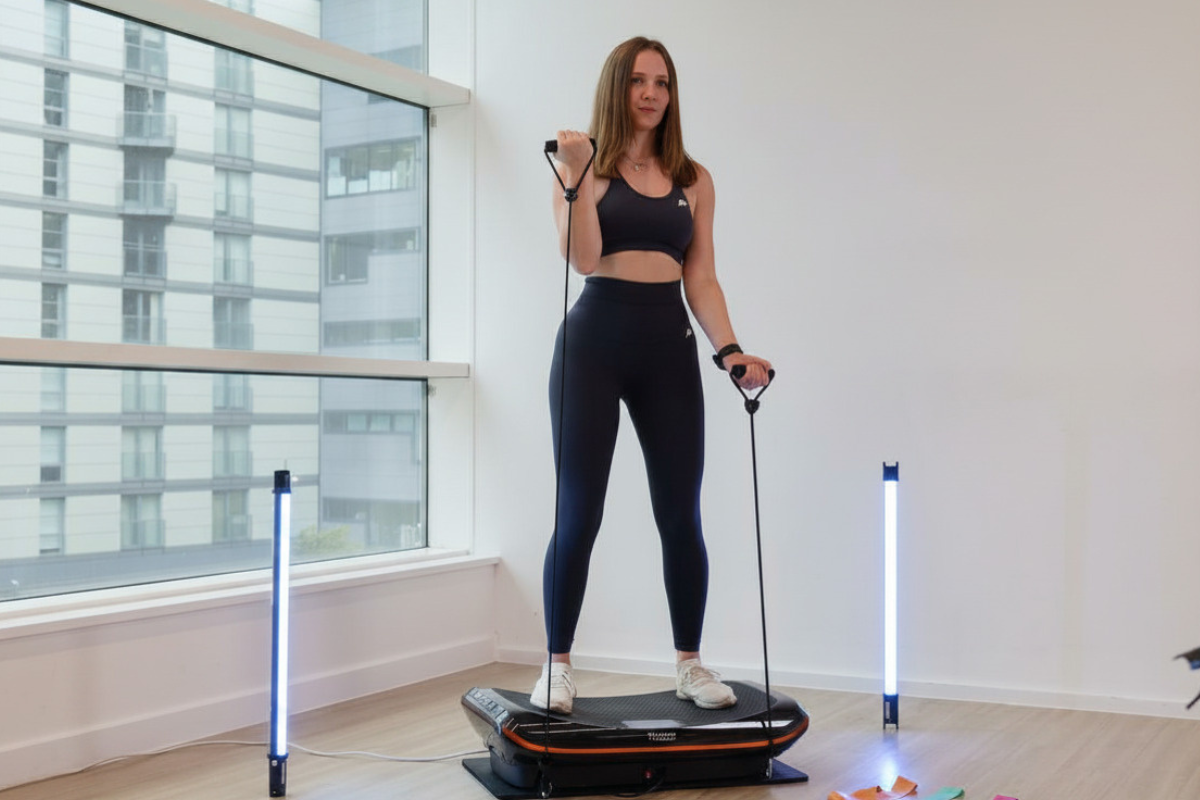
This guide explores seven evidence-informed strategies for using a vibration plate for recovery, covering how whole-body vibration stimulates muscle contractions, enhances blood flow, and supports lymphatic movement to help you bounce back faster after tough training sessions. Whether you're a serious athlete or simply managing everyday muscle tension, these practical techniques make effective daily recovery achievable at home.
Whether you've just finished a tough strength session, returned from a long run, or simply want to ease everyday muscle tension, recovery is where real progress happens. Yet it's also the part of fitness most people shortchange.
Enter the vibration plate. This tool has earned a genuine place in serious recovery routines because it works on multiple physiological levels simultaneously. Whole-body vibration stimulates rapid muscle contractions, encourages blood flow, and supports lymphatic movement, helping the body shift out of post-workout stiffness far more efficiently than passive rest alone.
The good news? You don't need a physio clinic or a gym membership to benefit. A quality home vibration plate puts effective, daily recovery within reach on your own schedule.
This guide breaks down seven practical, evidence-informed strategies for using a vibration plate specifically for recovery, not just general fitness. Each approach targets a different aspect of the recovery process, from loosening tight fascia to calming the nervous system after intense effort. Whether you're a weekend warrior, a daily gym-goer, or someone managing general muscle soreness from an active lifestyle, these strategies will help you get more from every session on the plate.
Ready to recover smarter? Let's get into it.

1. Use Low-Frequency Vibration to Flush Out Post-Workout Fatigue
The Challenge It Solves
That heavy, sluggish feeling after a hard session isn't just in your head. Post-workout fatigue involves metabolic byproducts, localised inflammation, and reduced circulation to worked muscles. If you simply stop moving and sit down, those processes stall. The body needs help clearing the decks, and that's exactly where a low-frequency vibration session comes in.
The Strategy Explained
Immediately after training, set your vibration plate to a low frequency, typically in the 20–30 Hz range, and stand or sit on it in a relaxed, upright position for 10 to 15 minutes. At this intensity, the vibration is gentle enough not to stress fatigued muscles further, but stimulating enough to encourage circulation and support the lymphatic system's natural drainage process.
Think of it like a passive cooldown that actually does something. Rather than lying on the sofa while your legs ache, you're actively encouraging blood flow and fluid movement without demanding anything from your already-taxed muscles. Research in the field of whole-body vibration suggests this kind of low-intensity post-exercise use can support perceived recovery and reduce that heavy, congested feeling in the limbs.
Implementation Steps
1. Set your plate to a low frequency (20–30 Hz) immediately or within 30 minutes of finishing training.
2. Stand in a relaxed, slightly bent-knee position or sit on the edge of the plate with feet resting on the surface.
3. Hold the position for 10–15 minutes, breathing slowly and keeping the body as relaxed as possible.
4. Follow with light hydration and a small recovery snack if appropriate for your training goals.
Pro Tips
Don't be tempted to crank the frequency up because you think more is better, this session is about gentle stimulation, not activation. Keep your posture relaxed rather than braced. If you're using a Bluefin plate with multiple frequency settings, start at the lower end and only increase if the lowest setting feels imperceptible.
2. Target Specific Muscle Groups with Positional Recovery Holds
The Challenge It Solves
Generic recovery rarely addresses the specific muscles that took the most punishment in a given session. After a heavy leg day, your quads and glutes need more attention than your shoulders. After a long run, your calves and hip flexors are the priority. Without targeted recovery, you're applying a blanket approach to a specific problem, and the areas that need the most help often don't get it.
The Strategy Explained
The vibration plate becomes significantly more versatile when you stop thinking of it as a "stand on it" device and start exploring intentional body positions. By changing how you position yourself on the plate, you can direct the vibration stimulus precisely to the muscles that need attention most.
Seated positions with legs extended target the hamstrings and lower back. A kneeling position with one knee on the plate addresses the quad and hip flexor of that leg. Placing your hands or forearms on the plate while in a plank position brings vibration to the upper body and core. Each position holds for 60 to 90 seconds before switching, giving each target area a focused dose of stimulation.
Implementation Steps
1. Identify the two or three muscle groups that feel most fatigued or sore from your session.
2. Research or experiment with positions that place those muscles in direct contact with or closest to the plate surface.
3. Hold each position for 60–90 seconds at a low to moderate frequency, keeping the target muscles relaxed rather than contracted.
4. Move through three to five positions in a single 15–20 minute recovery session.
Pro Tips
Use a mat or towel between bony contact points and the plate surface for comfort. The goal in each position is muscle relaxation, not stability work, so if you're gripping or tensing to hold a position, simplify it. Consistency in your positions over multiple sessions will help you learn exactly what works for your body.
3. Incorporate Passive Stretching on the Plate to Accelerate Flexibility Recovery
The Challenge It Solves
Post-workout stiffness isn't just uncomfortable, it can gradually limit your range of motion if it accumulates over time without proper management. Static stretching alone can feel slow and ineffective when muscles are tight and guarded. The connective tissue surrounding muscle fibres, known as fascia, is notoriously resistant to change through passive stretching alone. You need something that helps the tissue let go.
The Strategy Explained
Holding static stretches on a vibrating plate adds a layer of neuromuscular stimulation that can help muscles release more readily than stretching in silence. The gentle vibration appears to reduce the stretch reflex, the automatic muscular resistance your body triggers when it senses a muscle being lengthened, making it easier to ease deeper into a stretch and maintain it comfortably.
Research into whole-body vibration and range of motion suggests that vibration-assisted stretching can produce meaningful improvements in flexibility, though the precise mechanisms are still being explored in the literature. Practically speaking, many athletes and physiotherapists report that stretches feel more accessible and productive when performed on a vibrating surface compared to a static floor stretch.
Implementation Steps
1. Choose three to five stretches targeting your priority muscle groups: hamstrings, hip flexors, calves, and thoracic spine are common recovery focuses.
2. Set the plate to a low frequency (20–30 Hz) before entering your first stretch position.
3. Hold each stretch for 30–60 seconds, breathing slowly and allowing the muscle to release progressively rather than forcing depth.
4. Repeat each stretch two to three times, aiming to go slightly deeper on each repetition.
Pro Tips
Never force a stretch to the point of sharp pain. The vibration assists release, it doesn't override your body's protective signals. If a position feels unstable on the plate, use a wall or chair for light support. Evening is an ideal time for this routine, as the body tends to be warmer and more pliable after a full day of movement.
4. Schedule a Morning Mobility Wake-Up Routine to Reduce DOMS
The Challenge It Solves
Delayed onset muscle soreness, or DOMS, is a well-established physiological phenomenon that typically peaks 24 to 72 hours after intense exercise. It's that familiar stiffness that makes the day after leg day feel like you've aged 30 years overnight. The instinct is to rest completely, but gentle movement is actually one of the most effective ways to ease DOMS and restore functional movement quality.
The Strategy Explained
A short morning vibration plate session on the day after hard training serves as a structured, low-effort way to get blood moving through sore tissues without adding any meaningful training load. The idea is to use the plate as a mobility catalyst, waking the body up, reducing stiffness, and improving your capacity to move well through the rest of the day.
This isn't a training session. It's a 10 to 15 minute routine of gentle movement and positional holds designed to address the specific areas of soreness. Exercise scientists recognise that low-intensity activity supports the body's natural repair processes by promoting circulation to damaged tissue without causing further micro-trauma.
Implementation Steps
1. Keep the session to 10–15 minutes maximum, this is a wake-up, not a workout.
2. Start with two to three minutes of simply standing on the plate at low frequency to warm the tissues gently.
3. Move through four to six gentle mobility positions targeting sore areas, holding each for 30–45 seconds.
4. Finish with one to two minutes of slow, relaxed standing to bring the session to a calm close.
Pro Tips
Do this before caffeine if possible, your body's natural cortisol peak in the morning primes you for gentle movement. Keep the frequency low and the intention gentle. If soreness is severe, reduce the duration to five minutes and focus purely on the most affected areas. Over time, you'll notice that DOMS feels less debilitating when you manage it actively rather than waiting it out.
5. Use Vibration Plate Massage Positions to Replace or Complement Foam Rolling
The Challenge It Solves
Foam rolling is a popular myofascial release technique, but it requires active effort, pressing your bodyweight into a roller and moving deliberately across tight tissue. When you're genuinely fatigued, that active engagement can feel like more work than your body wants to do. There's also a skill element to foam rolling effectively, and many people find it uncomfortable to the point of abandoning it entirely.
The Strategy Explained
The vibration plate offers a more passive alternative for myofascial release. By placing specific body parts against or on the plate surface and allowing the vibration to do the work, you can achieve a similar tissue-loosening effect without the active compression of traditional foam rolling.
The approach is straightforward: position the target muscle group so it rests on or against the plate surface, set a low to moderate frequency, and simply hold the position. The vibration creates rapid, small-amplitude movement through the tissue that can help release tension in a way that's often more tolerable than direct foam roller pressure. This is particularly useful for the calves, hamstrings, glutes, and upper back.
Implementation Steps
1. Identify the muscle groups that would benefit most from myofascial release after your session.
2. Position the target area resting on the plate surface: for example, sit with hamstrings on the plate, or place your calf across the plate edge.
3. Set the plate to a moderate frequency (30–40 Hz) and allow the vibration to work through the tissue for 60–90 seconds per area.
4. Shift position slightly every 20–30 seconds to cover different portions of the muscle belly.
Pro Tips
This works particularly well as a complement to foam rolling rather than a complete replacement, use the plate for areas that are too sore for direct compression, and save the roller for less acute tension. Brands like Powerplate have built vibration-based recovery tools specifically around this concept, which speaks to how well-established the principle has become in professional recovery settings.

6. Build a Wind-Down Evening Session to Activate Parasympathetic Recovery
The Challenge It Solves
Hard training keeps your sympathetic nervous system, the "fight or flight" branch, switched on long after the session ends. Elevated cortisol, heightened alertness, and residual muscle tension can make it difficult to transition into the deep, restorative sleep your body needs to repair and adapt. Without that transition, you go to bed still physiologically wound up, and your sleep quality suffers as a result.
The Strategy Explained
A calm, low-intensity evening vibration plate session structured around slow breathing and gentle positions can actively support the shift toward parasympathetic dominance, the "rest and digest" state that enables genuine recovery. The key is keeping everything about the session calm: low frequency, slow breathing, minimal mental engagement, and a quiet environment.
Sports science recognises that low-intensity, rhythmic physical stimulation combined with controlled breathing can help regulate the autonomic nervous system after periods of high stress. The vibration plate provides the physical component; your breathing and mental state provide the rest. Together, they create conditions that prime the body for restorative sleep.
Implementation Steps
1. Schedule the session 60–90 minutes before your intended sleep time.
2. Dim the lights in the room and remove distractions: no screens, no loud music.
3. Set the plate to its lowest frequency setting and stand or sit in a comfortable, relaxed position.
4. Breathe in for four counts, hold for two, and breathe out for six counts throughout the session.
5. Keep the session to 10–15 minutes, ending with two to three minutes of stillness before stepping off.
Pro Tips
Pair this with other sleep hygiene habits for maximum effect, a consistent bedtime, a cool room, and reduced light exposure. If you find your mind racing during the session, use the breath counting as a focal point. The Bluefin Ultra SLIM plate is particularly well-suited to this kind of session because its silent-drive motor technology keeps background noise minimal, which matters when you're trying to wind down.
7. Track and Personalise Your Recovery Protocol Over Time
The Challenge It Solves
Recovery is not one-size-fits-all. What works brilliantly after a heavy strength session may be too stimulating after a high-volume endurance effort. What your body needs after a week of intense training is different from what it needs after a light active week. Without any form of self-monitoring, you end up applying the same recovery template regardless of context, and missing the opportunity to make your recovery genuinely responsive to your body's actual state.
The Strategy Explained
Building a simple self-monitoring habit allows you to adjust your vibration plate recovery sessions based on real-time feedback from your body. This doesn't require sophisticated technology or complicated tracking systems. A brief daily check-in, noting your training load, soreness level on a simple scale, sleep quality, and energy, gives you enough data to make informed decisions about which recovery strategy to prioritise on any given day.
Over time, patterns emerge. You might notice that you respond particularly well to the morning DOMS routine after lower body sessions, or that the evening wind-down is essential after high-stress training weeks. That personalised insight is far more valuable than any generic protocol.
Implementation Steps
1. Create a simple daily log: a notes app, a spreadsheet, or a physical notebook all work equally well.
2. Record four data points each day: training load (easy/moderate/hard), soreness level (1–5), sleep quality (1–5), and energy level (1–5).
3. Note which recovery strategy you used and how you felt before and after the session.
4. Review your log weekly to identify patterns and adjust your default recovery approach accordingly.
5. Experiment with one variable at a time: frequency, duration, or session timing, to understand what drives the best outcomes for you specifically.
Pro Tips
Don't overthink the tracking system. The goal is awareness, not perfection. Even two weeks of consistent logging will reveal patterns that help you recover more intelligently. If you're using a Bluefin plate with programmable settings, note which frequency ranges feel most effective for different recovery goals, that information becomes a genuinely useful personal reference over time.

Putting It All Together
Recovery isn't a passive process, it's an active investment in your next performance. A vibration plate gives you a genuinely versatile tool to support that investment at home, on your schedule, without expensive appointments or complicated equipment.
The seven strategies above cover the full spectrum of recovery: circulation support, targeted muscle attention, flexibility work, DOMS management, myofascial release, nervous system regulation, and personalisation. That's a comprehensive toolkit, and it all lives on a single piece of equipment that fits in the corner of a room.
You don't need to implement all seven at once. Start with one or two that match your current pain points. Dealing with heavy-leg fatigue after training? Begin with the post-workout low-frequency flush. DOMS your biggest obstacle? Build the morning mobility routine first. Once those habits feel natural, layer in the others.
If you're unsure which Bluefin vibration plate best fits your recovery goals, the range covers every need, from the ultra-slim profile of the Slim Vibration Plate for space-conscious home setups to the advanced 4D Triple Motor technology for those who want the full spectrum of vibration options. All Bluefin plates are backed by a solid warranty and a team you can contact any time.
Your recovery starts today. Learn more about our services and find the right plate for where you are in your fitness journey.
Share:
Vibration Plate for Lymphatic Drainage: How It Works and Why It Matters
How to Use a Vibration Plate for Weight Loss: A Step-by-Step Guide