

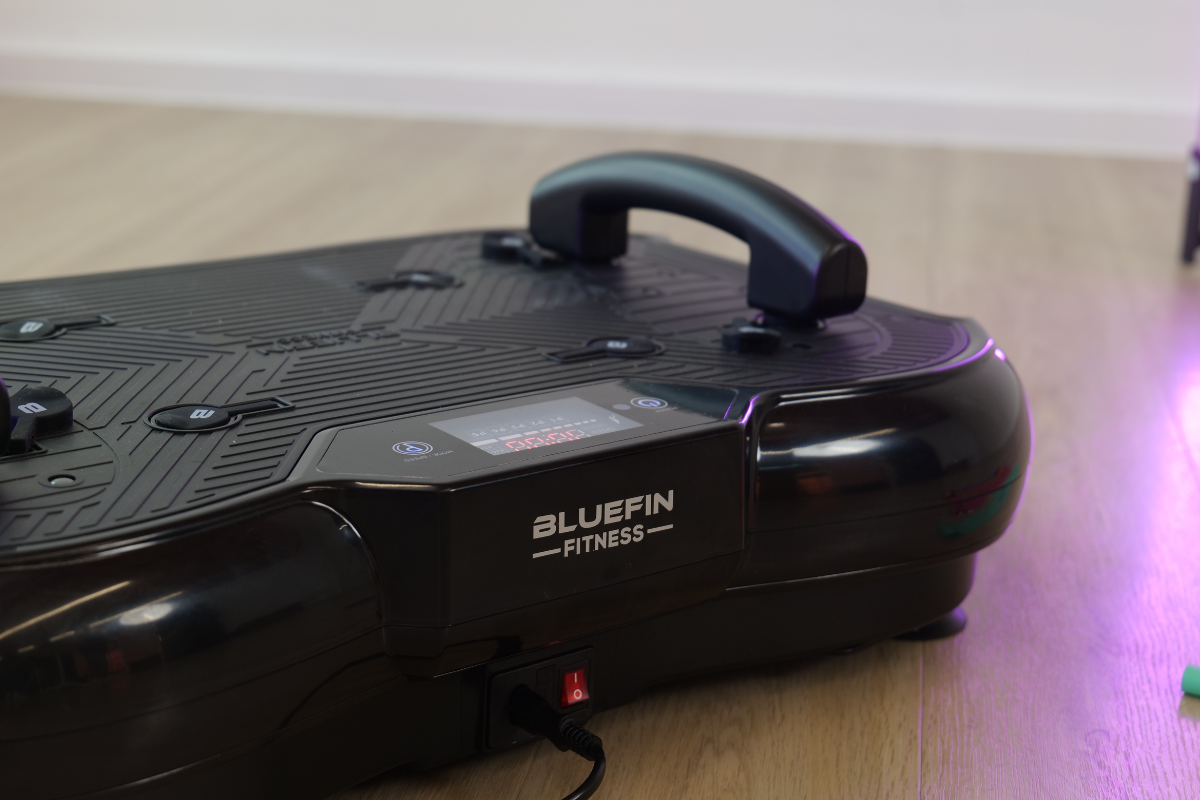
A vibration plate is a fitness platform that uses whole-body vibration to stimulate muscles, improve circulation, and complement your training routine. This complete guide cuts through the hype and scepticism to explain the real science behind vibration plates, how to use them effectively, and what to look for when buying one.

You've probably seen one at the gym, spotted it in a physio clinic, or scrolled past a video of someone casually standing on a buzzing platform while watching TV. And your first reaction was probably something like: "What on earth is that actually doing?" You're not alone. The vibration plate has gone from niche rehab equipment to one of the most talked-about pieces of home fitness kit in the UK and EU, and the curiosity (and scepticism) around it is completely understandable.
When you understand the science behind them and use them correctly, they're a genuinely effective, versatile tool that can complement your fitness goals in ways that might surprise you. The problem is that most of what's written about them online swings between breathless hype and flat-out dismissal, neither of which is particularly helpful if you're just trying to make a smart decision.
This guide is here to cut through all of that. Whether you've just started researching vibration plates or you're on the verge of buying your first one, you're in the right place. We're going to cover exactly what a vibration plate is, how the science actually works, what benefits you can realistically expect, how to use one properly, and how to choose the right model for your home and goals.
The Science Behind the Shake
At its core, a vibration plate is a motorised platform that produces rapid, rhythmic vibrations. When you stand, sit, or exercise on it, those vibrations travel through your body from your feet upward. Simple enough in concept, but what makes it interesting is what happens inside your body when those vibrations arrive.
Your nervous system interprets the rapid oscillation as instability. In response, it triggers something called the tonic vibration reflex, an involuntary muscular response where your muscles contract and relax at a rapid rate to compensate for the perceived movement. This happens automatically, without you consciously engaging those muscles. The result is that your muscles are working significantly harder than they would during a comparable static exercise, simply because your body is constantly trying to stabilise itself.
Think of it like this: standing still on solid ground requires some muscle effort, but not much. Stand on a vibrating platform, and suddenly your legs, core, and stabilising muscles are firing continuously just to keep you upright. That's the fundamental principle that makes vibration training genuinely useful, it creates a muscle stimulus that's hard to replicate passively.
Now, not all vibration plates work in the same way. The type of vibration matters, and understanding the differences helps you make a smarter choice.
Oscillating (pivotal) vibration: The platform tilts from side to side, like a seesaw. One side rises while the other falls, alternating continuously. This mimics the natural weight-shifting movement of walking and tends to target the lower body and core particularly well. It's the most common type found in entry-level and mid-range plates.
Linear (vertical) vibration: The entire platform moves uniformly up and down. This creates a more direct, vertical force through the body and can produce a stronger stimulus across the whole musculoskeletal system. It's often found in more clinical or professional settings.
4D multi-directional vibration: This is where things get genuinely exciting. Rather than moving in a single plane, a 4D platform combines multiple directions of movement simultaneously, vertical, horizontal, and pivotal, producing a far more complex and comprehensive stimulus throughout the body. Bluefin Fitness's 4D Triple Motor technology works on exactly this principle, using three separate motors to generate this multi-directional vibration. The result is a fuller, more effective whole-body response compared to single-axis plates.
The frequency at which a plate vibrates (measured in Hertz, or Hz) also plays a significant role. Lower frequencies tend to feel gentler and are often used for relaxation and recovery, while higher frequencies create a more intense muscle activation stimulus. Most quality plates let you adjust this, giving you control over the type of session you want.

What Can a Vibration Plate Actually Do for You?
Muscle activation and toning: This is the primary benefit, and it's well-grounded in the physiology we just covered. The tonic vibration reflex causes your muscles to contract repeatedly and rapidly during each session. Over time, with consistent use, this can contribute to improved muscle tone, particularly in the legs, glutes, and core.
Improved circulation: The rapid muscular contractions stimulated by vibration help push blood through the vessels more efficiently. Many users report a noticeable warming sensation in their legs during use, that's increased blood flow doing its job. Better circulation supports recovery, reduces the feeling of heavy or tired legs, and can be particularly beneficial for people who spend long hours sitting at a desk.
Flexibility and range of motion: Using a vibration plate for stretching, holding positions like a hamstring stretch or hip flexor stretch while the platform vibrates, can enhance the effectiveness of those stretches. The vibration encourages muscles to relax and lengthen more readily than in static stretching alone.
Post-workout recovery: Lower-frequency vibration sessions are increasingly used as a recovery tool, supporting lymphatic drainage and helping to reduce muscle soreness after more intense training. A short, gentle session after a run or strength workout can feel genuinely restorative.
Balance and stability: Because every session on a vibration plate challenges your stabilising muscles, regular use can improve proprioception, your body's sense of its own position in space. This is particularly valuable for older adults, where improved balance directly contributes to fall prevention and everyday confidence.
Bone density support: Research has explored the relationship between vibration therapy and bone health, particularly in older adults and those with osteoporosis. It's an area of ongoing scientific interest, and while it's important not to overstate the current evidence, it's worth noting as one of the reasons vibration plates have found a place in physiotherapy and rehabilitation settings.
For busy professionals, parents, or anyone who struggles to carve out gym time, the efficiency argument is compelling. A focused 10–15 minute vibration plate session can deliver meaningful muscle activation in a fraction of the time a conventional workout would take. For those with joint concerns or limited mobility, the low-impact nature of vibration training makes it accessible when other forms of exercise might be uncomfortable or risky.
Not All Vibration Plates Are Built the Same
Walk into any online marketplace and you'll find vibration plates ranging from budget options to premium engineering, and the price difference isn't arbitrary. Understanding what separates them helps you spend wisely.
Motor quality and power: The motor is the heart of any vibration plate. Budget models often use lower-quality motors that produce inconsistent vibration, struggle under load, and tend to be significantly louder. A well-engineered motor delivers smooth, consistent vibration at the frequency you select, and does so quietly. This matters more than you might think, especially for home use where noise can be a genuine issue.
Frequency range: The range of Hz available on a plate determines how versatile it is. Entry-level plates may offer a narrow frequency range, limiting you to one type of stimulus. Quality plates give you a broader range, allowing you to dial in lower frequencies for recovery and relaxation, and higher frequencies for muscle activation and training.
Amplitude: Amplitude refers to how far the platform actually moves during each vibration cycle. Higher amplitude means a more pronounced movement and a more intense stimulus. Budget plates often have very low amplitude, which can make the vibration feel weak and reduce its effectiveness. Premium plates offer meaningful amplitude that you can actually feel working.
Platform size and build quality: A larger platform gives you more room to perform a wider range of exercises, squats, lunges, push-ups, and stretches all benefit from adequate space. Build quality affects both safety and longevity. Look for solid construction, non-slip surfaces, and a weight capacity that comfortably exceeds your own body weight.
The distinction between single-motor and multi-motor platforms is worth understanding in detail. A single-motor oscillating plate moves in one plane. It works, and for many users it's perfectly adequate. But a multi-motor platform, like the 4D Triple Motor technology in Bluefin Fitness's advanced range, uses multiple motors working in coordination to produce movement across several planes simultaneously. The result is a richer, more complex stimulus that engages a broader range of muscle groups more effectively. It's a meaningful engineering difference, not just a marketing label.
Noise levels: This is a practical concern that doesn't get enough attention. Cheap vibration plates can be genuinely disruptive, rattling loudly enough to disturb others in the house or neighbours in a flat. Bluefin Fitness's UK-designed silent-drive motor technology addresses this directly, producing effective vibration without the racket. If you're planning to use your plate early in the morning, late at night, or in a shared living space, this matters enormously.
Safety and support: Look for CE certification and safety compliance relevant to the UK and EU market. Consider whether the brand offers a meaningful warranty and accessible customer support. Buying from a brand with a genuine UK and EU presence means you're not left stranded if something goes wrong. These are the unglamorous details that separate a good purchase from a frustrating one.
Getting Started: How to Use a Vibration Plate Effectively
One of the most common mistakes new users make is jumping on a vibration plate at full intensity for twenty minutes and wondering why they feel strange afterwards. Like any training tool, there's a sensible way to begin, and it pays to start conservatively.
Begin with short sessions: For your first week or two, aim for 5 to 10 minutes per session. This gives your body time to adapt to the novel stimulus. Many people are surprised by how much they feel even a short session, the muscle activation is real, and your body needs time to adjust. You can gradually build toward 15 to 20 minute sessions as you become more comfortable.
Choose the right frequency for your goal: Lower frequencies (typically around 20–30 Hz) are ideal for relaxation, gentle recovery, and improving circulation. Higher frequencies (30–50 Hz and above) create a more intense muscle activation stimulus suited to training sessions. Most quality plates let you adjust this easily, use that control intentionally rather than just picking a random setting.
Posture matters: The single most important posture tip for vibration plate use is to keep your knees slightly bent. Standing with locked, straight knees transmits vibration more directly to your joints, particularly your spine, which is uncomfortable and counterproductive. Soft, slightly bent knees act as natural shock absorbers and direct the stimulus into your muscles where you want it.
Beyond simply standing on the plate, there's a surprisingly wide range of vibration plate exercises you can incorporate. Here are some to get you started:
Static holds: Simply standing with slightly bent knees, or holding a squat position, is a legitimate and effective starting point. Your stabilising muscles are working hard even when you're "just" standing.
Squats and lunges: Performing bodyweight squats or split-stance lunges on the platform significantly increases the muscle activation compared to the same movements on solid ground.
Push-up variations: Placing your hands on the platform while performing push-ups adds an instability element that engages your chest, shoulders, and core more intensely.
Stretching: Holding stretches, hamstrings, hip flexors, calves, while the plate vibrates can meaningfully improve the depth and effectiveness of each stretch.
Recovery sessions: Sitting or lying with your legs resting on the plate at a low frequency is a popular recovery technique, particularly after leg-heavy training days.
On the safety side, there are a few groups who should consult their doctor before using a vibration plate: pregnant women, individuals with certain medical implants (including pacemakers), anyone who has had recent surgery, and those with specific conditions affecting the spine or joints. Always wear trainers rather than using the plate barefoot, and use the support strap that comes with most models if you're new to it or working at higher intensities. These aren't reasons to be afraid of the equipment, just sensible precautions that apply to most forms of exercise.

Finding the Right Plate for Your Home and Goals
Choosing the right vibration plate comes down to matching the technology to your actual life: your space, your goals, and where you are in your fitness journey.
If you're working with limited floor space, a compact plate that can slide under a bed or stand upright in a corner is a genuine priority. There's no point buying a large, impressive platform if it ends up living in the garage because it doesn't fit in your living room. Conversely, if you have the space and you're serious about getting the most from your training, a larger platform with advanced features will serve you far better long-term.
Beginners typically do well starting with a quality oscillating plate that covers the fundamental bases: a decent frequency range, a solid build, and a manageable size. As your experience grows and your goals become more specific, you may find yourself wanting more from the technology — more vibration planes, more precise frequency control, more platform space for a wider range of exercises.
This is exactly the thinking behind the Bluefin Fitness range. The Ultra SLIM is designed for space-conscious buyers who don't want to compromise on quality, it's compact enough to fit neatly into a home without dominating the room, while still delivering effective vibration training. For those who want versatile, everyday training capability with room to grow, the mid-range options offer a strong balance of features and value.
And for those who want the most advanced vibration technology available for home use, the 4D Triple Motor platform represents the top of the range. Three independent motors working in coordination produce the multi-directional 4D vibration stimulus that simply isn't achievable with a single-motor plate. If you're serious about getting the most comprehensive whole-body vibration experience, this is where the engineering genuinely makes a difference.
Not sure which one is right for you? Bluefin Fitness offers a personalised quiz to help match your goals, space, and experience level to the ideal plate, it takes just a few minutes and removes a lot of the guesswork. A small nudge toward a decision that could genuinely change how you approach your home fitness routine.
Your Questions, Answered
How long should I use a vibration plate per day? For most people, 10 to 20 minutes per day is a sensible target once you've built up from the initial shorter sessions. Some users split this into two shorter sessions, one for training and one for recovery. More isn't always better; quality of use matters more than duration.
Can I use it every day? Yes, most people can use a vibration plate daily, particularly if you're varying the intensity and purpose of each session. Alternating between higher-intensity training sessions and gentler recovery sessions is a smart approach that allows your body to adapt without overloading it.
Will it help me lose weight? A vibration plate can support weight management as part of a broader active lifestyle. The muscle activation burns energy, and improved muscle tone over time can contribute to a healthier metabolism. But it works best alongside cardio, strength training, and good nutrition, not as a standalone solution.
Do vibration plates actually work? This is the big one. The honest answer is yes, when used correctly and consistently. The tonic vibration reflex is a real physiological mechanism, not a marketing concept. The benefits around muscle activation, circulation, flexibility, and recovery are well-supported by the underlying science. Results depend on how you use the plate and what you combine it with. Treat it as a serious training tool rather than a passive gadget, and it will deliver.
Are they noisy? Budget models can be surprisingly loud, a persistent hum or rattle that carries through floors and walls. Quality plates with proper motor engineering are significantly quieter. Bluefin Fitness's silent-drive motor technology is specifically designed to address this, making it practical for flat-dwellers and anyone who trains while others are sleeping or working nearby.
How much space do I need? Most vibration plates have a footprint roughly comparable to a large doormat. Compact models like the Ultra SLIM are designed to fit into smaller spaces and can be stored upright or slid under furniture when not in use. Measure your available space before buying, it's a simple step that prevents a lot of frustration.
What about warranty and support? Bluefin Fitness ships to the UK and across the EU, with customer support and warranty backing designed for that market. Buying from a brand with genuine regional support means any questions or issues are handled by people who are actually accessible, not a distant overseas returns process.
Share:
Bluefin Vibration Plates Compared: Which Is Right?
7 Best Strategies to Get the Most from Your Vibration Plate